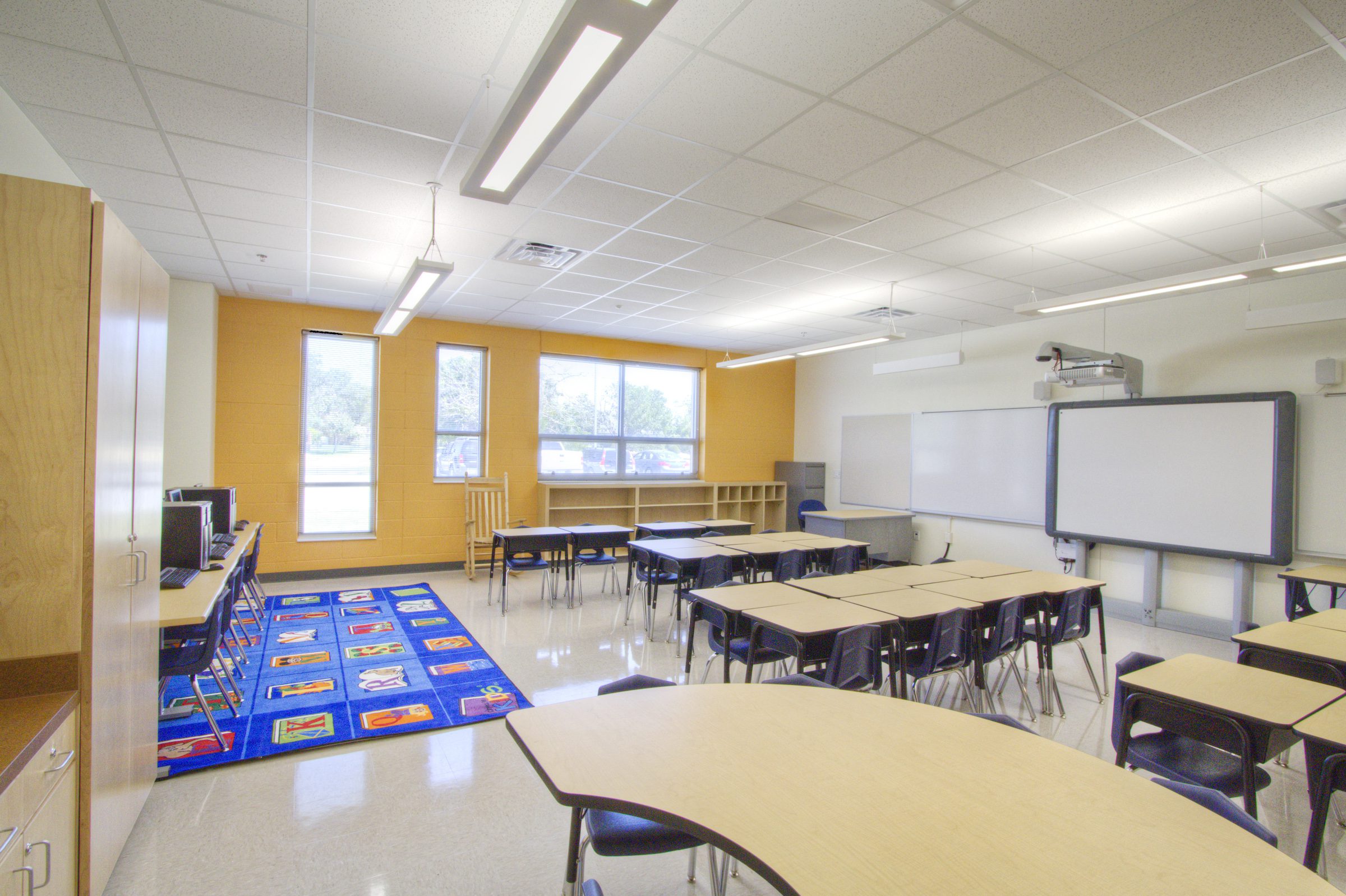

Proper lighting in schools is a very important aspect that is often overlooked. Electricity can take up a huge percentage of a school’s budget if not monitored closely. In fact, it’s estimated that about 25 percent of a school’s electricity will be used for the school’s lighting.
When you also factor in the amount necessary to compensate for the heat that gets generated from old lighting fixtures the cost goes up even more. The money spent on these utilities could be better put to use by making sure the general condition of the school building is in good shape, everyone is safe, and the educational environment is adequate.
LED lighting continues to grow in popularity, and many institutions are choosing to make the switch from previous lighting methods.
Safety
LED lighting produces a lower heat output than traditional lighting. Naturally, when there is a lower heat output, there will also be a reduced fire risk. The increase in efficient lighting will also make it easier to light dark hallways or areas that are likely to be vandalized which will increase the security of the building while providing a safer amount of light for students.
Educational Value
The LED lighting upgrades can productivity and concentration in students. Studies have shown that performance increases in well-lit areas. Too dark can cause a sleepy effect and too light may lead to headaches or eyestrain.
It seems that higher illumination, and warmer-colored illumination, lead to higher academic performance when compared with the efforts of students under standard lighting.
This is true in the college lecture hall and in the kindergarten class. It appears that school lighting may be as important as technology in determining the quality of our children’s education.
We have long recognized the effect of natural sunlight on the human body to produce both physiological and psychological health. Research cited by“Academia.edu” indicates that artificial lighting can approximate the sun’s beneficial effects and stimulate student learning.
Two characteristics of light are noted in the study. One is the brightness, or intensity, and the other is the color temperature. Together, these aspects can alter our sleep patterns and quality, our blood pressure, heart rate variability and core temperature as well as regulating the amount of melatonin we produce.
They also affect our mental alertness and the perception of how well we understand a subject we are studying. We have supposed that natural sunlight is superior to artificial lighting, but research shows that artificial lighting can have a positive effect on the speed with which we work and our accuracy.
How does all this play into choosing school lighting? First, it has been demonstrated that lighting which approximates natural sunlight can keep children healthier. That translates to less “sick days” out of the classroom.
When the student is in class, proper lighting can keep her alert and help her be more attentive to teacher instruction. Lighting has also been shown to affect mood and behavior. Brighter light (over 500lux) seems to promote better moods and less aggressiveness.
Data from schools in the study also shows how a dynamic lighting system (one in which the lighting can be changed) can bring about relaxation in students after periods of enhanced learning. This could keep students from tiring too early and having dulled senses in the afternoon.
Better For Students
Better lighting in schools is better for everyone. Students and teachers will not have to worry about lights that do not stay on, or lights that will constantly flicker. Flickering lights can cause headaches for some students.
It can be very easy to only focus on the cost benefits and the environmental benefits. There are many other fantastic reasons to love LED lighting. They may not be as obvious, but they are still plentiful.
It has long been established that select lighting situations may exacerbate the signs and symptoms of certain neurological disorders. Those disorders include, but are not limited to, ADHD, autism, PDD, and Asperger’s syndrome. The reasons why such individuals’ symptoms may worsen are often connected to the light fixture’s inherent design. For example, some light fixtures emit noises, UV rays, infrared lights, and pulsating illumination that can overload the senses. Some light fixtures contain neurotoxins (mercury), which would be harmful to those with neurological deficits.
LED lights, on the other hand, do not have any of those undesirable characteristics. Thus, they are ideal for use in special needs and combination classrooms. In addition, the light that emanates from LEDs is also directional, sufficiently bright, and glare-free. All three are features that may help to reduce eye strain for students and staff alike.
Energy Savings
The energy savings can be substantial. Plus, LED lights are Eco-friendly in numerous ways. A lighting retrofit at a primary school in Peoria, IL, is estimated to eliminate 1.76 million lbs of carbon dioxide emissions over the next decade. In a retrofit at Thomas Jefferson School, 600 T12 fluorescents were replaced by dimmable LEDs.
Fluorescent lights have been omnipresent in school buildings for many years. In fact, in many buildings, they have represented the primary source of electrical usage, by far.
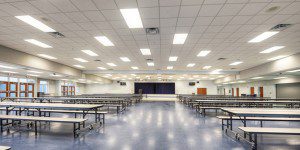
With LED lighting energy consumption is typically reduced from 50 to 90 percent. Imagine a $10,000 electric bill cut to $5,000, or much less. Second, LEDs do not emit the UV wavelengths of light that fluorescents do. UV light exposure is associated with prematurely degrading numerous substances, including certain plastics and fabrics.
Third, fluorescents contain mercury. Accidental breakage of fluorescent tubes has often resulted in the need for very careful, and therefore expensive, cleanup. Furthermore, the deleterious effects of mercury on the environment and human health are well-documented. A conversion to LED lighting demonstrates concern for the well-being of students and faculty alike.
Fourth, the greenish tinge of fluorescent light quality is both unflattering and an impediment to lab observations, for example, those that require attention to color changes. By contrast, LEDs that closely mimic the light spectrum of sunlight can be installed.
Fifth, LEDs offer much greater longevity than traditional fluorescents. The long hours that fluorescent lights have to be in service in a school are self-evident. It is not only during class hours that illumination is required. Today, school structures are more multi-purpose than ever. For example, many high schools serve as campuses for technical colleges that offer primarily evening classes. Extracurricular activities are as numerous as ever. Moreover, many sports practices, for example, require illumination for large areas for hours on end. Basketball courts, wrestling practice areas, and swimming pools require significant illumination.
For more information on how installing LEDs and doing retrofit solutions can improve your school’s lighting, contact us via the Relumination website. Our experts will quickly assess your specific needs and calculate the savings possible